
Services

Overview
Supported by the CIRM Shared Resource Labs (SRL) infrastructure initiative, our center provides advanced stem cell engineering and genome editing services for biomedical research. We specialize in iPSC reprogramming, gene editing, genomic stability assays, and differentiation to neuronal, muscular, and immune cell lines.
How to Initiate a Project and Obtain Pricing Information
To initiate a project and obtain pricing, please connect with the specific contact listed under your chosen research service below.
Our Services
Copy Number Variation Analysis
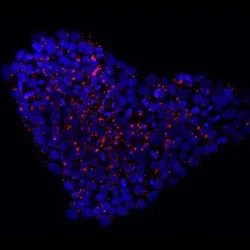
Copy number variation (CNV) analysis is performed using low-pass whole genome sequencing to assess genomic integrity in induced pluripotent stem cell (iPSC) lines and genetically engineered cell lines. This approach enables detection of large-scale chromosomal abnormalities and genomic copy number changes that may arise during reprogramming, genome editing, or long-term cell culture.
CNV analysis provides a rapid and cost-effective method for screening cell lines prior to banking, validating genome editing outcomes, and monitoring genomic stability during experimental workflows.
- Starting Material: Cell Pellet or Genomic DNA (gDNA)
- Estimated Completion Time: 4 - 6 Weeks
- Project Deliverables: Genome-wide CNV profile and Analysis Report
For details, contact: Hyokyeong Cha, PhD
Differentiation
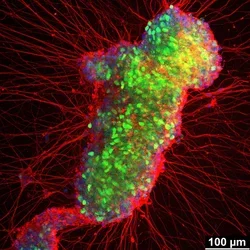
Differentiation studies are performed using established and custom-developed protocols to generate specialized cell types from induced pluripotent stem cells (iPSCs) for disease modeling, functional genomics, and translational research applications. Provided through the California Institute for Regenerative Medicine (CIRM) Shared Resource Laboratories (SRL) initiative, our facility features specialized workflows for neural, muscle, and immune cell line differentiation to directly support CIRM-funded projects and accelerate regenerative medicine breakthroughs. These pipelines are anchored by standardized quality-control measures and automation-enabled culture systems to ensure maximum reproducibility and scalability.
Our team collaborates with investigators throughout all stages of a project, from grant development and experimental design to protocol optimization, cell production, and downstream characterization. This collaborative framework enables researchers to access advanced stem cell differentiation capabilities while accelerating the development of robust and physiologically relevant cellular models.
For details, contact Kitai Kim, PhD.
iPSC Reprogramming
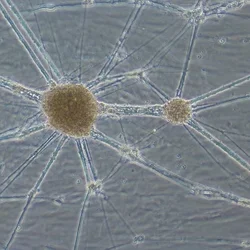
Induced pluripotent stem cells (iPSCs) are generated from patient-derived cells, such as fibroblasts or peripheral blood mononuclear cells, using integration-free reprogramming methods. These approaches avoid genomic integration of reprogramming factors, preserving genomic integrity and ensuring compatibility with downstream applications. The resulting iPSC lines provide stable, expandable cell models that can be used for disease modeling, genome editing, differentiation studies, and drug discovery.
- Starting Material: PBMC / Fibroblast
- Estimated Completion Time: 3 - 4 Months
- Project Deliverables: Minimum 3 Clones + Characterization Report
For details, contact: Hyokyeong Cha, PhD
Stem Cell Genome Editing
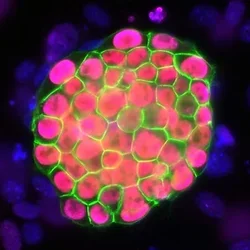
Genome engineering services are available for induced pluripotent stem cells (iPSCs) using CRISPR-based technologies and related genome editing platforms. These approaches enable precise genetic modifications, including gene knockouts, targeted insertions, reporter integration, and correction or introduction of disease-associated mutations.
Genome editing in iPSCs enables the generation of isogenic cell models for studying gene function, investigating disease mechanisms, and validating therapeutic targets. Edited cell lines can be expanded and characterized for downstream applications including differentiation studies, functional genomics, and drug discovery.
- Starting Material: Stem Cell Lines
- Estimated Completion Time: 4 - 6 Months
- Project Deliverables: Minimum 3 Clones + Characterization Report
For details, contact Deniz Ata, PhD.
Stem Cell Genome Editing Services - Price List
Acknowledgement of Our Services
For submitting manuscripts that have made use of services or resources from this center, please acknowledge support by inclusion of the following information:
This work was supported by the UCLA Dr. Allen and Charlotte Ginsburg Center for Precision Genomic Medicine.
Please link each publication stemming from work performed in the center to your MyNCBI account. This will ensure that the contributions from NIH are appropriately acknowledged in renewal and continuation applications. This NIH requirement must be satisfied as part of our efforts to provide consistent access to stabling funded center resources.